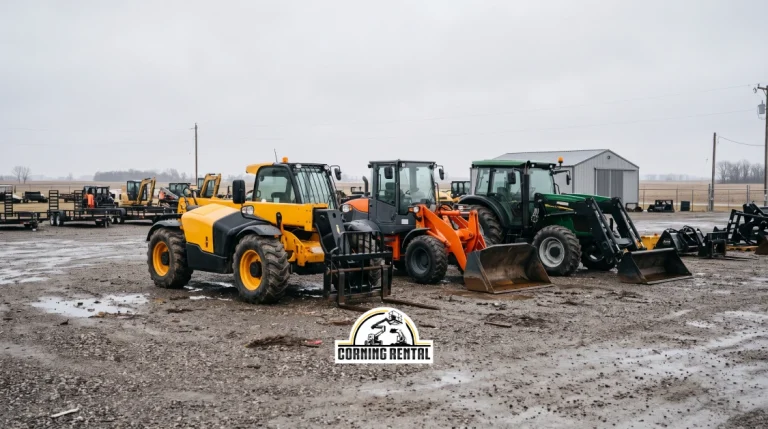
Moving iron and palletized materials across a job site is rarely one-size-fits-all. Try driving a cushion-tire warehouse forklift onto rutted southwest Iowa topsoil after rain, and you will sink the drive axle within five yards. Conversely, mobilize an 80-foot telehandler just to strip pallet racks in a climate-controlled facility, and you burn fuel maneuvering a machine too wide for the aisles.Getting material handling right saves time, prevents rigging incidents, and keeps operating margins intact. Contractors from Council Bluffs to Des Moines balance boom reach, surface stability, and lifting limits across every phase of construction. Renting lets you match equipment to the immediate task instead of forcing one machine to do jobs it was never engineered to handle.
What Is Material Handling Equipment and Why Rent It?
Material handling equipment covers the powered machines used to pick, carry, stage, and elevate materials across a job site or inside a plant. Renting this machinery bypasses the massive capital overhead, insurance carrying costs, and depreciation that come with buying heavy iron outright.
Beyond capital savings, several field factors favor renting:
- Matching machinery to job phases: A commercial job might need an all-terrain telehandler to place structural steel early on, then switch to a compact electric forklift for finishing work weeks later. Renting lets you trade machines as needs shift.
- Capital preservation: Skipping a six-figure down payment keeps cash free for payroll, trade subcontractor draws, and raw material orders.
- No internal shop overhead: Field gear takes a beating. Our in-house mechanics handle grease intervals, hydraulic line checks, and engine inspections before every machine ships out.
- Flexible billing schedules: Equipment scales on daily, weekly, or 4-week rental blocks depending on weather holds and general contractor timetables.
When Should You Rent a Warehouse Forklift?
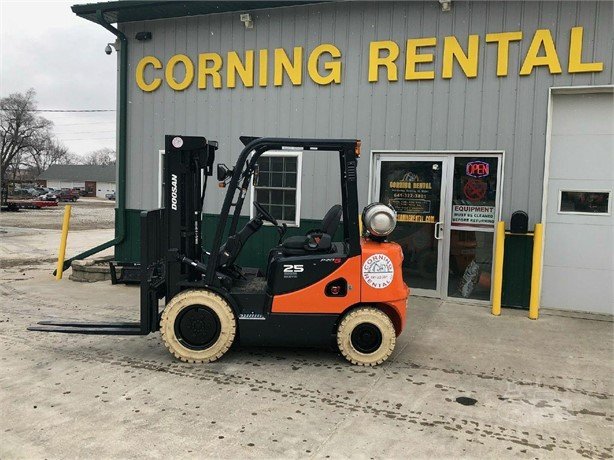
Rent a warehouse forklift when your work takes place on flat, cured concrete or paved asphalt docks. These units use a vertical mast assembly, compact counterweights, and tight steering angles to work in narrow storage aisles and freight staging bays.
Our forklift inventory focuses on workhorse capacities designed for steady indoor duty:
- Warehouse Forklifts (3,750 to 5,000 lbs): This size bracket handles standard banded lumber, fasteners, masonry anchors, and crated mechanical fixtures. Solid cushion tires give direct tracking and stable lifting on level slabs without bouncing under load.
- Multi-stage masts: Three-stage mast systems drop low enough to clear 8-foot dock doors, yet extend upward to place pallets directly into third-tier racking systems.
- Indoor operations: Low-emission engines and quiet hydraulic systems protect indoor air quality in occupied manufacturing plants and storage hubs.
Take a warehouse forklift onto uncompacted grade, however, and you lose traction instantly. Rough ground requires large pneumatic tires, wider stances, and forward-reaching booms.
Forklift Rentals
Why Is a Telehandler the Ultimate Job-Site Material Handler?
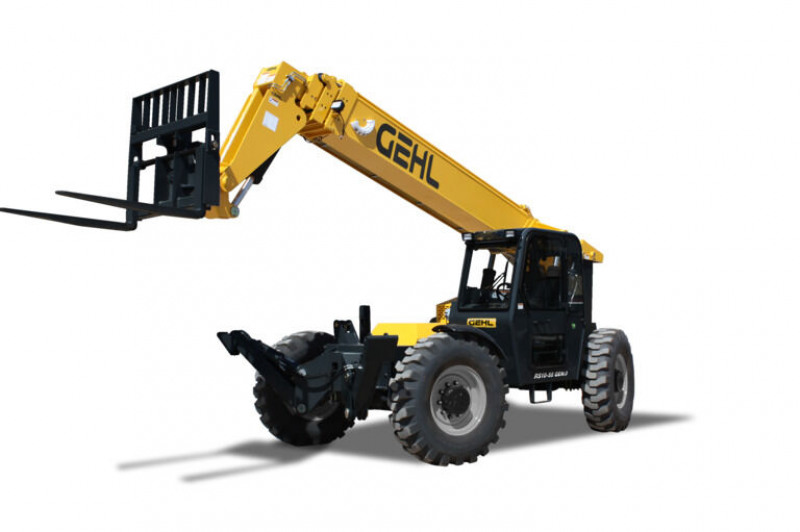
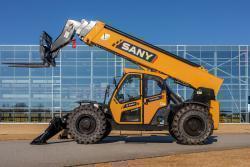
A telehandler works as the ultimate job-site handler because it merges the high capacity of a forklift with the forward outreach of a mobile crane. Instead of lifting only vertically along an upright mast, its telescopic boom pushes loads up and across job-site obstacles, deep foundation trenches, and unfinished landscape berms.
Contractors book a telehandler rental whenever rough ground or site obstacles keep transport trucks from pulling up right beside the staging area.
| Machine Class | Maximum Lift Height | Typical Field Use | Best Ground Conditions |
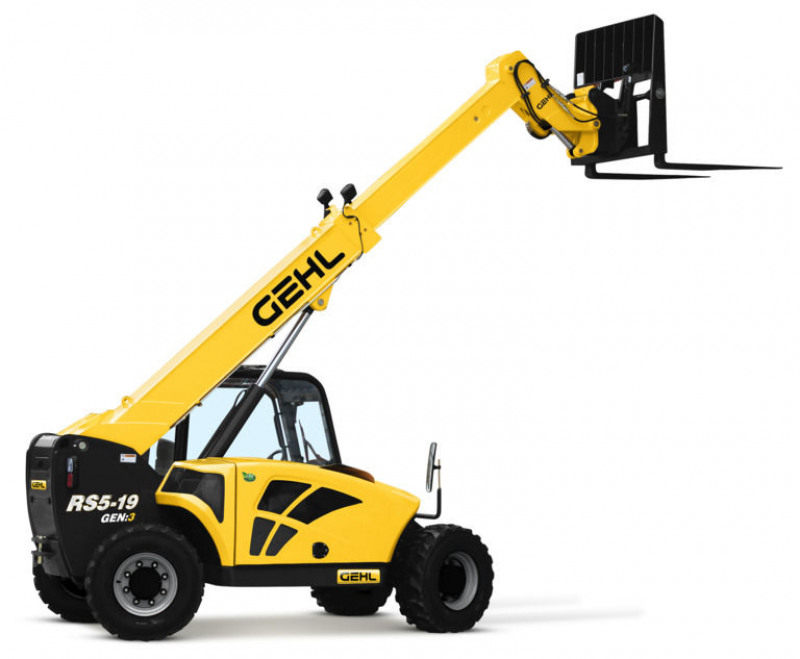
| 5,000 lb Telehandler | 19 ft | Residential framing, residential masonry, landscape supplies | Packed dirt, turf, crushed gravel |
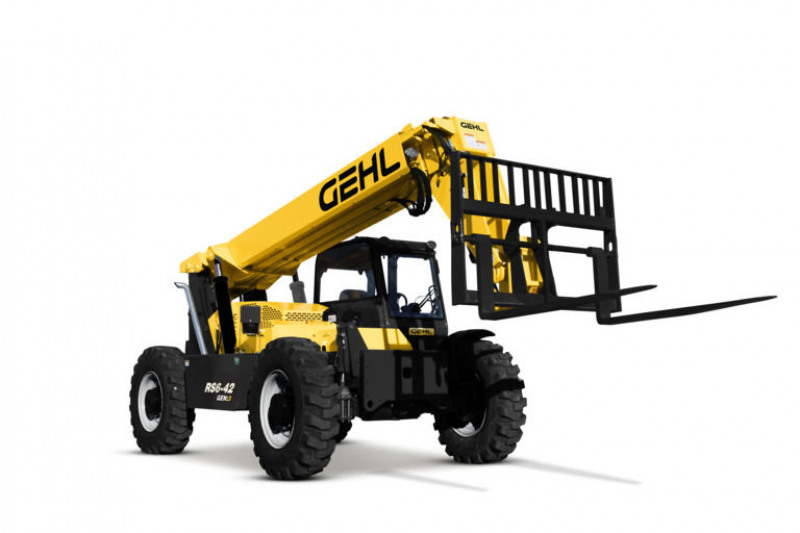
| 6,000 lb Telehandler | 36 ft to 42 ft | Two-story framing, roofing bundles, metal wall studs | Rutted job-site dirt, unfinished grade |
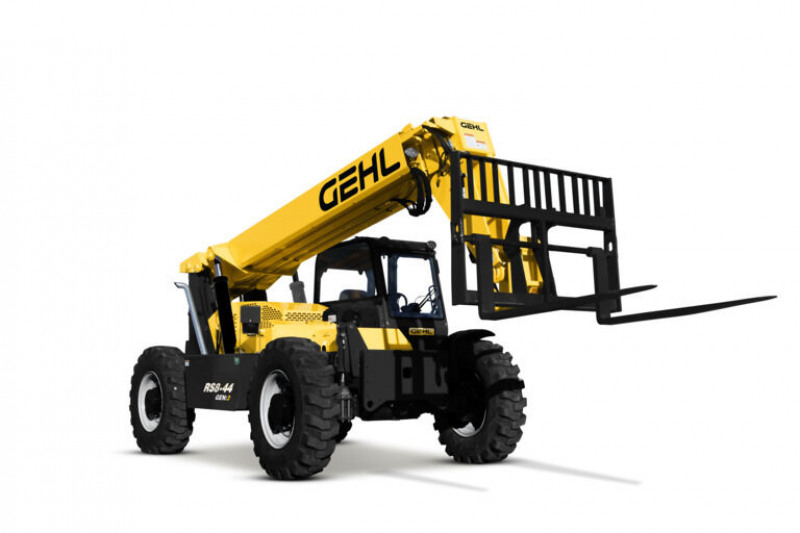
| 8,000 lb Telehandler | 42 ft to 44 ft | Three-story commercial structures, steel plates, piping | Loose dirt, muddy clay |
| 10,000 lb Telehandler | 54 ft to 56 ft | Commercial builds, structural tilt-up, precast panels | Heavy rough terrain (stabilizers down) |
| 12,000 lb Telehandler | 55 ft | Civil work, bridge substructures, industrial shutdowns | Engineered gravel pads, heavy industrial grade |
Light and Mid-Sized Telehandlers (5,000 to 8,000 lbs)
A 5,000 lb unit offers a low cab height and short wheel base, letting it work through tight barn doors and compact residential developments where full-sized telehandlers cannot turn. Step up to a 6,000 lb model, and you gain three stories of vertical lift, making it a reliable pick for roofers and framing crews setting trusses. The 8,000 lb model adds heavier counterweights, giving masonry teams the stability needed to boom cubes of brick and mortar tubs across open perimeter footings.
Heavy-Capacity Telehandlers (10,000 to 12,000 lbs)
When commercial jobs demand reaching heights over 50 feet, load chart margins get tight. A 10,000 lb telehandler uses front hydraulic stabilizers to plant the frame firmly before hoisting structural steel or insulated metal panels. For industrial plant shutdowns and civil engineering projects, a 12,000 lb machine delivers the power needed to unload heavy shoring, pipe assemblies, and generator skids.
Telehandler Rentals
When Is a Compact Wheel Loader the Best Choice for Material Moving?
Choose a compact wheel loader when your team needs to cycle loose bulk materials fast without tearing up the ground. Unlike skid steers that drag rubber across surfaces to turn, articulated wheel loaders pivot cleanly at a center joint. That pivot cut down on tire scrub and protects site surfaces.
Renting a compact wheel loader pays off in material yards, aggregate sites, and landscaping projects:
- Faster haul cycles: Hydrostatic transmissions keep machine speed high when shuttling gravel, topsoil, or road base from delivery piles to backfill points.
- Clear view from the cab: The high center seating gives operators a clear line of sight over the bucket edge, helping them spot site workers, trench lines, and low obstacles.
- Surface protection: Center-articulated steering protects finished asphalt, concrete aprons, and established lawn areas from tire-scuffing damage.
- Rapid attachment swaps: Operators can swap between buckets, pallet forks, and utility sweepers in minutes via hydraulic couplers, keeping the loader active all day.
Tractors Rentals
How Do Utility Tractors Fit into Job-Site and Property Management?
Utility tractors handle site support tasks by pairing front-end hydraulic bucket lifting with heavy-duty three-point hitch pull power. Loaders and telehandlers focus purely on carrying materials, but tractors supply the PTO power required for brush cutting, trenching, pasture prep, and grading.
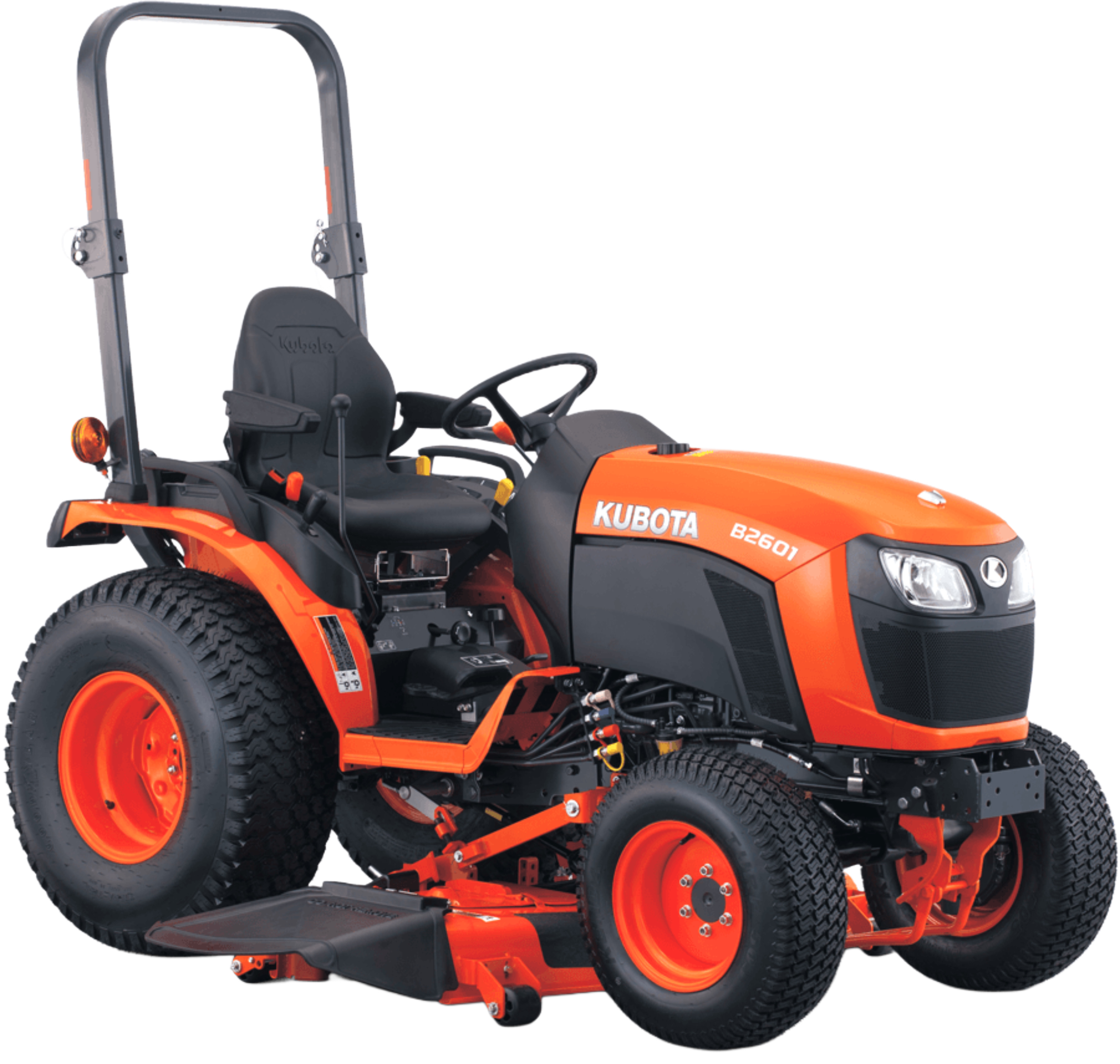
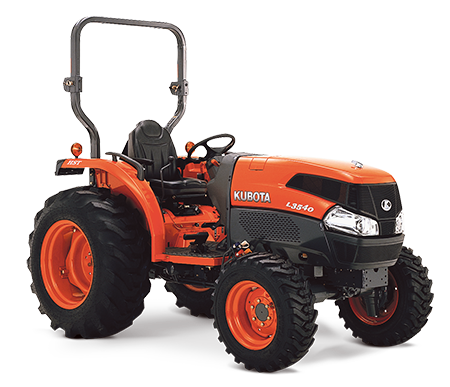
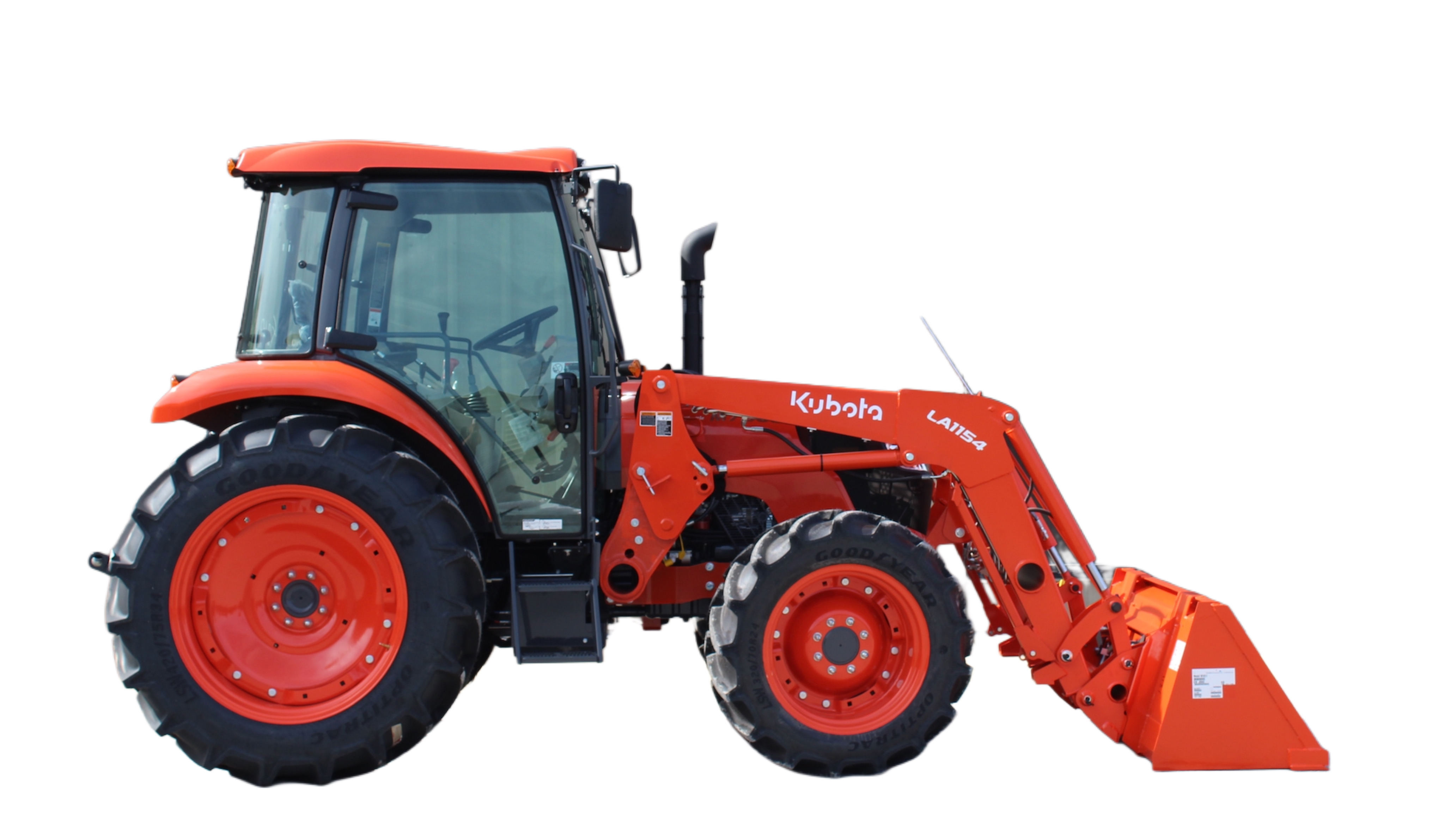
We supply three dependable sizes in our tractor rental fleet:
- 26hp Tractor: Compact enough to clear 6-foot fence gates, this unit handles small acreages, post-hole digging, and light dirt grading without leaving ruts in private lawns.
- 35hp Tractor: With stronger hydraulic flow and heavier pull capacity, this machine runs commercial rotary mowers and box blades along utility easements and open rural roadsides.
- 70hp Tractor: Built for tough dirt work and farm duties, a 70hp tractor pulls heavy disc harrows, aggregate box spreaders, and heavy seeders through tough field soil.
For equipment safety walk-throughs and job-site checklists, browse our rental guide blogs.
Compact Wheel LoaderRentals
How to Select the Right Material Handler for Your Job
Picking the right machine means checking your job site against four baseline operational variables before booking a rental.
1. Payload Limits and Center of Gravity
Weigh your heaviest anticipated pick, factoring in pallet weights, packaging straps, and rigging chains. Check the machine load chart carefully. A telehandler rated for 8,000 pounds can only lift that capacity with the boom retracted close to the tires. Extend that boom horizontally 30 feet, and safe load limits drop fast.
2. Vertical Lift Height vs. Forward Reach
Decide whether your operators need pure vertical lifting or true horizontal outreach. Stacking crates against an interior warehouse wall calls for a vertical mast forklift. Landing drywall stacks through a second-story framed window opening over an exterior ditch requires an extendable boom telehandler.
3. Surface Stability and Tire Profile
Smooth warehouse floors require solid cushion tires to handle heavy point-loading without floor marking. Unpaved job-site dirt, rural field mud, and loose gravel across Iowa require aggressive four-wheel-drive lug tires and locking axles to prevent the machine from getting stuck.
4. Working Speed vs. Precision Placement
If you need to move tons of crushed limestone from an aggregate stockpile across three acres, an articulated wheel loader clears the material in half the time a forklift would take. If your operators are placing precast concrete lintels onto wall ties, you need the smooth inching controls and hydraulic steadiness of a telehandler.
Material Handling Equipment Comparison
Compare primary operating specs across each material handling group to pick the unit built for your site constraints.
| Equipment Class | Capacity Range | Lift / Reach Profile | Surface Compatibility | Primary Advantage |
| Warehouse Forklift | 3,750 to 5,000 lbs | Up to 15 ft vertical | Smooth concrete / level slab | Small turning radius, zero indoor exhaust soot |
| Compact Telehandler | 5,000 to 6,000 lbs | 19 ft to 42 ft reach | Unpaved dirt, gravel roads | Low profile clearance, rough-terrain capability |
| Heavy Telehandler | 8,000 to 12,000 lbs | 42 ft to 56 ft reach | Heavy mud, rough grades | Extended outreach and heavy structural capacity |
| Compact Wheel Loader | 1,500 to 4,000 lbs bucket | 8 ft to 12 ft dump height | Dirt, rock, asphalt, turf | Fast haul speed, zero surface gouging |
| Utility Tractor | 26hp to 70hp engines | Front bucket & 3-point rear | Farm soil, pasture, gravel | PTO drive flexibility, grading, brush mowing |
Streamlined Fleet Delivery and Job-Site Support Across Iowa
Corning Rental, Sales, & Service brings over 25 years of equipment experience to regional contractors. From our four regional branches in Corning, Shenandoah, Glenwood, and Osceola, our teams keep jobs running smoothly throughout southwest Iowa.
Our semi-truck fleet delivers and collects equipment within a 250-mile radius of any branch, covering jobs throughout South Iowa, Eastern Nebraska, and Northern Missouri, including Omaha, Council Bluffs, Des Moines, and Kansas City. Our shop mechanics inspect and service every machine before it leaves the yard. When our drivers drop iron on your site, they can walk your crew through basic operating controls and safety features so you can get to work right away.
Check real-time fleet availability, compare machine specs, and book your rental online 24/7, or call your nearest Corning Rental yard to talk with our team.
Frequently Asked Questions
What is the primary difference between a telehandler and a rough terrain forklift?
A rough terrain forklift lifts straight up and down on a vertical mast, requiring the machine to park directly next to the landing point. A telehandler uses a telescoping hydraulic boom that extends upward and outward, letting operators reach across ditches, scaffolding, or wall openings to land loads safely.
How do I calculate telehandler capacity for a high-reach lift?
Always check the cab load chart before lifting. Rated machine capacity applies only when the boom is retracted close to the chassis. As the boom extends forward or upward, mechanical leverage shifts, and safe lifting limits decrease significantly.
Can warehouse forklifts operate safely outside on gravel surfaces?
No. Warehouse forklifts have low ground clearance and solid cushion tires made only for flat concrete or asphalt. Driving one onto loose gravel, mud, or uncompacted dirt spins the drive wheels, risks high-centering the frame, and creates a severe tip-over danger.
How far does Corning Rental deliver rental equipment?
Corning Rental hauls and picks up machines within a 250-mile radius of our branches in Corning, Shenandoah, Glenwood, and Osceola, Iowa. This delivery radius covers South Iowa, Eastern Nebraska (including Omaha and Council Bluffs), and Northern Missouri.
What daily maintenance checks are required during a rental period?
Renters should walk around the machine daily to inspect engine oil, coolant levels, hydraulic hoses, and tire pressures. Grease pivot points daily and top off tanks with clean diesel or fuel. If a mechanical issue occurs, our field mechanics dispatch directly to your job site to handle repairs.